
Miniature Circuit Breaker (MCB)
A Miniature Circuit Breaker (MCB) is one of the most essential protective devices in residential, commercial, and industrial electrical systems. It automatically controls the flow of electrical current in a circuit and instantly cuts off the power in case of an overload or short circuit, preventing damage to wiring, switchboards, and electrical equipment.
In simple terms, an MCB acts like a small but precise electrical guard that constantly protects your circuit. Whenever the current exceeds the safe limit, it quickly reacts to ensure the safety and reliability of your electrical system.
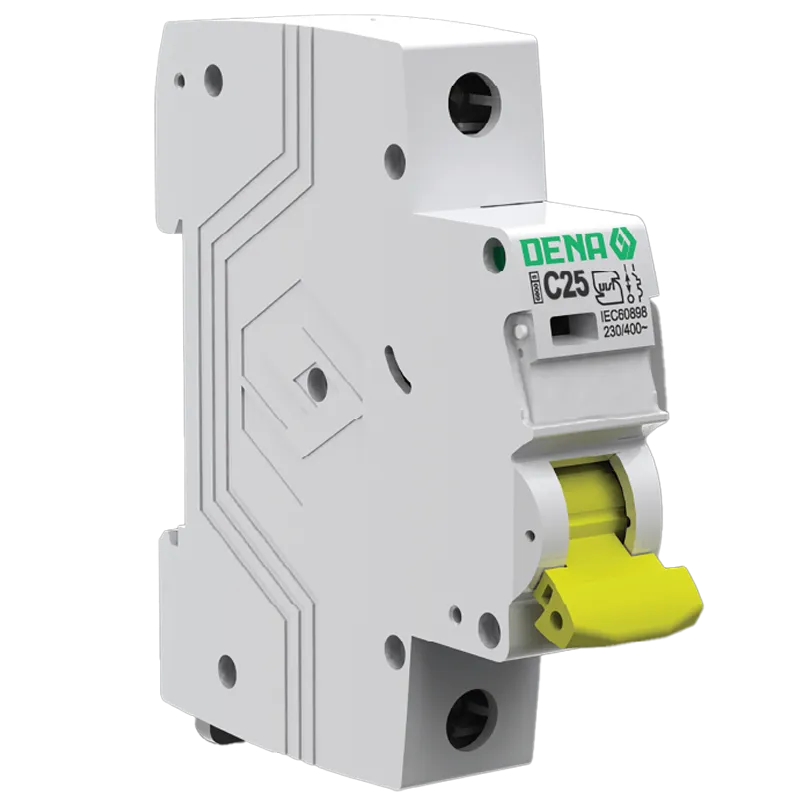
🔌 Main Applications of Miniature Circuit Breakers — The Smart Protector of Electrical Circuits
The Miniature Circuit Breaker (MCB) is one of the most widely used protective devices in both residential and industrial electrical systems.
With its fast and precise performance, it safeguards electrical equipment against hazards such as overloads and short circuits.
1. Protection Against Overload
When the circuit carries more current than it is designed for—due to excessive load or device malfunction—the MCB automatically disconnects the power.
This feature prevents damage to electrical appliances, overheating of wires, and potential fire hazards, ensuring total safety of the system.
2. Protection Against Short Circuit
If a direct connection occurs between phase and neutral, or phase and ground, an intense current flows through the circuit.
The MCB reacts within milliseconds, cutting off the circuit to prevent equipment burnout and damage to the power network.
3. Reliable Replacement for Fuses
Unlike traditional fuses that need replacement after tripping, an MCB can be reused.
Once the fault is resolved, simply reset the lever to the ON position to restore the circuit.
4. Manual Circuit Control
In addition to protection, the MCB can be used as a manual ON/OFF switch, providing convenient control over individual sub-circuits.
5. Protection for Residential and Industrial Equipment
MCBs are used in household, commercial, and industrial electrical panels to protect devices such as lighting systems, sockets, small motors, transformers, and sensitive electronics.
They enhance the lifespan of electrical systems and reduce maintenance and repair costs.
Main Components of a Miniature Circuit Breaker (MCB)
A miniature circuit breaker consists of several key components, each playing an important role in protecting circuits and electrical equipment:
Contacts
The path for electrical current, which opens and closes to control the circuit flow.
Thermal Trip Mechanism
A temperature-sensitive metal strip detects overloads in the circuit. As the temperature rises, the strip bends, and the MCB automatically trips.
This mechanism protects wiring and electrical devices from excessive current.
Magnetic Trip Mechanism
To detect short circuits, a magnetic coil senses high current and instantly trips the MCB.
This function prevents serious damage to the circuit and connected equipment.
By understanding these key components and their operation, residential, commercial, and industrial electrical systems can be designed and protected safely and reliably.
⚡ Important Tips for Choosing a Miniature Circuit Breaker (MCB)
Selecting the right Miniature Circuit Breaker (MCB) is crucial for maintaining electrical safety and extending the lifespan of electrical equipment.
If chosen incorrectly, the circuit may not trip in time or may trip unnecessarily during normal operation.
Below are the most important factors to consider when choosing an MCB:
1. Rated Current (In)
The rated current must match the load of the circuit. Common ratings for residential use are 6A, 10A, 16A, and 20A, while higher ratings are used in workshops and industrial applications.
💡 Tip: Choosing a higher current rating reduces protection, while a lower rating causes unnecessary tripping.
2. Tripping Curve (Type)
MCBs are classified by their tripping characteristics:
Type B: For residential and lighting circuits (more sensitive to short surges)
Type C: For motor and industrial loads with moderate inrush current
Type D: For heavy-duty equipment with high inrush current such as transformers and large motors
Choosing the right type ensures accurate operation and prevents unwanted tripping.
3. Number of Poles
MCBs are available in 1P, 2P, 3P, and 4P versions:
1P: Single-phase (phase only)
2P: Phase and neutral
3P: Three-phase
4P: Three-phase with neutral
The number of poles should match your electrical system (single-phase or three-phase).
4. Breaking Capacity
This parameter indicates the maximum short-circuit current the MCB can safely interrupt without damage.
It is usually 6kA to 10kA.
For industrial environments with higher short-circuit risks, a higher breaking capacity is recommended.
5. Quality and Brand
Build quality and compliance with standards are key factors.
Reputable brands like Schneider Electric, Siemens, Hager, Legrand, LS, and Hyundai offer reliable performance and longer lifespan.
6. Ambient Temperature and Installation Conditions
Ambient temperature affects performance — at higher temperatures, MCBs may trip faster.
Proper ventilation and installation conditions in the distribution board ensure safe and reliable operation.
Dena Electric: Miniature Circuit Breakers for a Modern Future
With a distinguished history in the electrical and protective equipment industry, Dena Electric proudly manufactures high-quality Miniature Circuit Breakers (MCB). Our products combine advanced technology, superior safety, and long-lasting durability to meet the needs of homes, small businesses, and large industries alike.
The Dena Service technical team, with specialized expertise in electrical protection systems, is ready to provide you with fast, reliable, and standard-compliant services. ⚙️
With Dena Electric, you don’t just get a safe and durable MCB — you take a step toward a modern and intelligent future in electrical systems.