Home Page » RCBO Residual Current Circuit Breaker
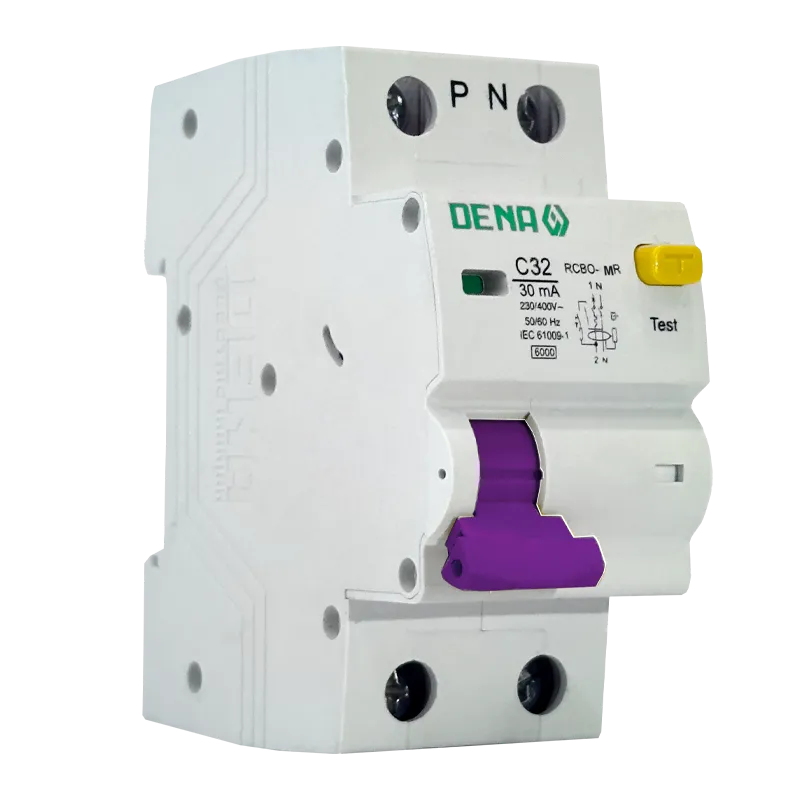
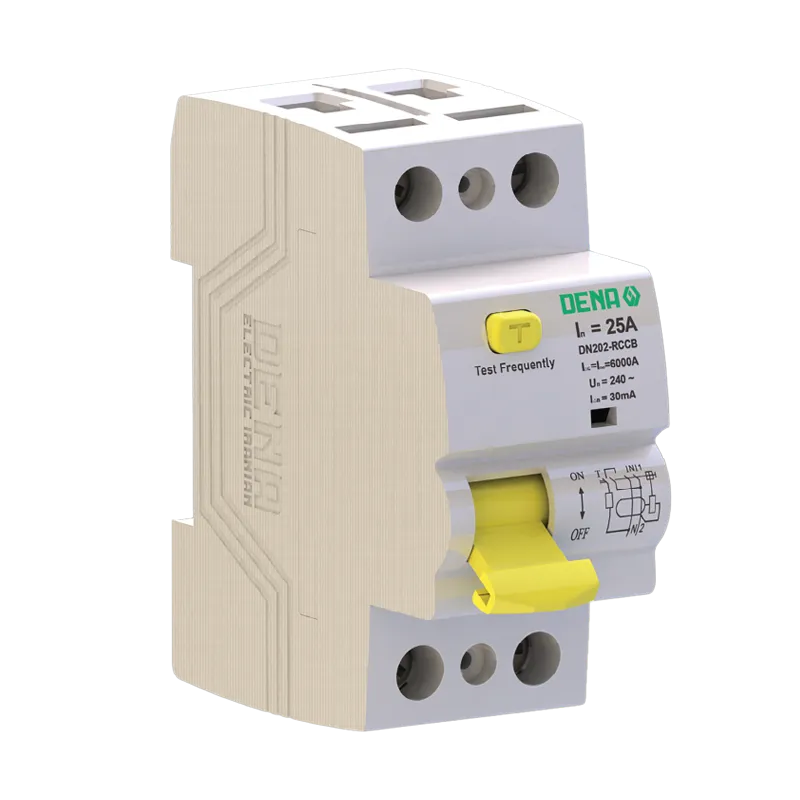
RCBO Residual Current Circuit Breaker
Features
| Abbreviation | Residual Current Breaker with Overcurrent protection |
|---|---|
| Standard | EN/IEC610086700-1 |
| Protection | Earth Leakage – Overload – Short Circuit |
| Number of Poles | Double Pole (Single-Phase + Neutral) |
| Operating Voltage | 230/400 V |
| Rated Current | 63-50-40-32-25-20-16 A |
| Rated Conditional Short-Circuit Current | 6000 A |
| Surge Voltage | 4000 V |
| Tripping Curve | C , B |
RCBO Residual Current Breaker with Overcurrent Protection
The RCBO (Residual Current Breaker with Overcurrent Protection) is a vital device in electrical systems, providing simultaneous protection against earth leakage, overload, and short circuits. Designed according to EN/IEC61008 6700-1 standards, it is suitable for single-phase systems with neutral as a double-pole device. Its operating voltage is 230/400V, supporting rated currents from 16A to 63A. The RCBO can withstand short-circuit currents up to 6000A and has a surge voltage rating of 4000V, ensuring both equipment and user safety. Available in C and B tripping curves, the RCBO prevents risks associated with leakage, overload, and short circuits.
RCBO Maintenance Tips:
Proper maintenance ensures optimal performance and longevity:
Periodic inspection: Check the RCBO and wiring at least every six months for mechanical damage, burn marks, or corrosion.
Functional test: Use the test button (T) monthly to verify correct operation and leakage protection.
Cleaning: Prevent dust and moisture accumulation; clean the device and surrounding area with a dry, non-abrasive cloth.
Avoid overload: Do not exceed the rated current of the RCBO. Continuous overload accelerates wear.
Proper installation environment: Install in a dry, cool place, away from heat sources and high humidity.
Secure connections: Ensure tight and correct wiring to terminals to avoid sparks and heat.
No unauthorized modifications: Never open or tamper with internal parts to prevent electric shock or device damage.
Periodic replacement: Replace immediately if any malfunction, unwanted tripping, or visible damage occurs.
Benefits of RCBO:
Simultaneous protection of people and equipment: Protects against earth leakage, overload, and short circuits simultaneously.
Reduces risk of electric shock: Quickly cuts off electricity during leakage, enhancing safety.
Extends equipment lifespan: Controls overloads and short circuits to prevent damage.
Easy installation and use: Available in double-pole and single-phase versions, replacing traditional fuses and RCDs.
Reduces repair and maintenance costs: Prevents equipment failure and wiring damage.
Versatile compatibility: Suitable for dry and humid environments, residential, industrial, and commercial applications.
Fast fault response: Short response time to leakage and electrical faults improves system safety.
With Dena, a modern future is in your hands. Dena Service supports you fully, providing a safe and reliable experience with Dena products.
Applications of RCBO (Residual Current Circuit Breaker)
RCBO is a vital device for enhancing safety in electrical systems, with the following applications:
Protection against electric shock: RCBO detects leakage currents to the ground and quickly cuts off power, preventing the risk of electric shock.
Protection of electrical equipment: In addition to leakage detection, it can identify overloads and short circuits, protecting devices and extending their lifespan.
Residential and commercial circuits: Used in homes, offices, and shops to protect outlets, sensitive electrical devices, and lighting circuits.
Industrial environments and workshops: In factories and workshops with heavy machinery, RCBO prevents hazards caused by leakage currents and overloads.
Wet or hazardous areas: In places such as bathrooms, kitchens, pools, or high-humidity workshops, RCBO plays a crucial role due to its high sensitivity.
Lighting and socket circuits: Provides simultaneous protection for lighting systems and power outlets, especially in combined circuits.